

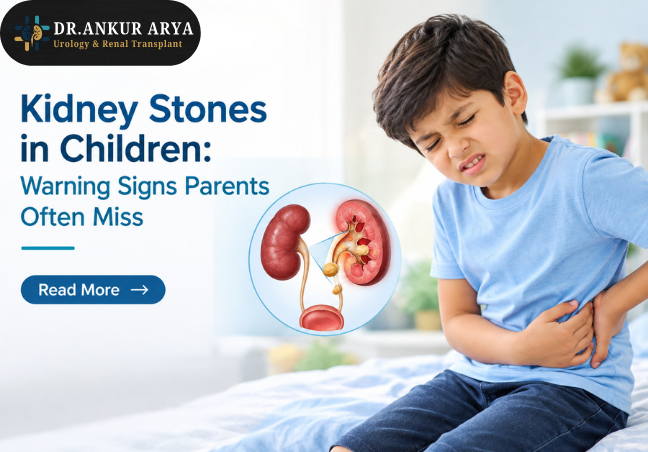
Kidney Stones in Children: Warning Signs Parents Often Miss
Introduction
Kidney stones are often associated with adults, but children can develop them too. When minerals and salts in urine become highly concentrated, they can form hard deposits inside the kidneys or urinary tract. Some kidney stones are tiny and pass naturally, while larger stones may cause significant pain or block the flow of urine.
Because children may not always be able to clearly describe what they are feeling, the early signs of kidney stones can easily be mistaken for stomach problems, urinary infections, or simple discomfort. Recognizing these warning signs can help parents seek medical attention at the right time.
What Causes Kidney Stones in Children?
Several factors can contribute to kidney stone formation in children. These include inadequate water intake, excessive salt consumption, certain dietary habits, family history, urinary tract abnormalities, and some metabolic conditions.
Children who regularly drink very little water or spend long periods without fluids may produce more concentrated urine. In some cases, certain medications or underlying medical conditions can also increase the risk of developing stones.
A pediatric evaluation is important when a child has repeated urinary symptoms or a history of kidney stones in the family.
Warning Signs Parents Should Not Ignore
1. Severe or Unexplained Abdominal Pain
One of the most common symptoms is pain. A child may complain of pain in the abdomen, side, lower back, or groin. The pain may come in waves and may become intense enough to make the child restless or unable to sit comfortably.
Younger children may simply cry, become irritable, or repeatedly change positions without being able to explain why.
2. Pain or Burning While Urinating
A child may experience discomfort, burning, or pain during urination. Parents sometimes assume this automatically means a urinary tract infection. While infections can cause similar symptoms, kidney stones can also irritate the urinary tract and produce painful urination.
If these symptoms continue or return repeatedly, medical assessment is advisable.
3. Blood in the Urine
Blood in the urine can occur when a stone irritates the lining of the urinary tract. The urine may appear pink, red, or brown, although sometimes blood is only detected through laboratory testing.
Any unexplained blood in a child's urine should be evaluated by a healthcare professional rather than ignored.
4. Frequent Urination or Urgency
A child with a urinary stone may suddenly need to urinate more frequently or feel an urgent need to use the bathroom. They may also complain that they still feel the need to urinate after using the toilet.
These symptoms can resemble a urinary infection, making proper diagnosis particularly important.
5. Nausea and Vomiting
Kidney stone pain can sometimes trigger nausea or vomiting. If vomiting occurs along with severe abdominal, side, or back pain, parents should not assume that the child simply has a stomach infection.
Persistent vomiting can also contribute to dehydration, which may further increase the concentration of minerals in the urine.
6. Fever and Chills
Fever may indicate an infection associated with a urinary obstruction. A blocked urinary tract combined with infection can become serious and requires prompt medical attention.
If a child has fever, chills, significant pain, vomiting, or difficulty passing urine, parents should seek medical care promptly.
7. Changes in Urine
Parents may notice cloudy, unusually dark, strong-smelling, or discoloured urine. These changes can have many causes, including dehydration and urinary infections, but they should not be dismissed when accompanied by pain or other urinary symptoms.
Why Kidney Stones Can Be Missed in Children
Children do not always experience or describe kidney stone symptoms in the same way adults do. A young child may complain of generalized stomach pain instead of pointing to the side or lower back.
Some children may become unusually quiet, irritable, or reluctant to eat. Others may repeatedly visit the bathroom without clearly explaining that urination is painful.
Because these symptoms overlap with several common childhood conditions, parents should avoid self-diagnosing the problem. A doctor can determine whether the symptoms are related to kidney stones, infection, constipation, or another condition.
When Should Parents See a Urologist?
Parents should consider consulting a urologist if a child has recurring urinary symptoms, unexplained blood in the urine, repeated severe abdominal or back pain, or a confirmed history of kidney stones.
Choosing the best urologist in Paschim Vihar can help families receive appropriate evaluation and guidance based on the child's symptoms and medical history.
Depending on the situation, the doctor may recommend urine tests, blood tests, ultrasound, or other imaging investigations. These tests can help identify a stone, determine its size and location, and check whether there is any obstruction.
Treatment for Kidney Stones in Children
Treatment depends on the stone's size, location, symptoms, and whether it is causing an obstruction or infection.
Small stones may sometimes pass naturally with appropriate hydration and medical monitoring. Doctors may also recommend medicines to control pain or assist stone passage when appropriate.
Larger stones or stones that do not pass may require a procedure. Modern urological treatments can often manage stones with minimally invasive techniques, depending on the child's individual condition.
Parents should never give medications or attempt home treatments without medical advice.
How Can Kidney Stones Be Prevented?
Prevention is particularly important for children who have already developed a kidney stone. Encouraging regular water intake is one of the simplest measures parents can take.
A balanced diet with appropriate salt intake, adequate nutrition, and healthy eating habits can also be beneficial. However, dietary recommendations should be individualized, especially if the child has recurrent stones or an underlying metabolic problem.
If a child has repeated kidney stones, consultation with the best urologist in Paschim Vihar may help identify possible contributing factors and develop an appropriate prevention strategy.
Parents can also encourage children to drink water regularly rather than waiting until they feel thirsty. During hot weather or physical activity, fluid requirements may increase.
Don't Ignore Unusual Urinary Symptoms
Kidney stones in children are uncommon compared with adults, but they should not be overlooked. Severe abdominal or back pain, painful urination, blood in the urine, frequent urination, nausea, vomiting, or fever can all warrant medical evaluation.
Early assessment can help identify the cause of symptoms and prevent complications. If your child has persistent or recurring urinary problems, consulting the best urologist in Paschim Vihar can be an important step toward proper diagnosis and treatment.
Most importantly, parents should pay attention to changes in their child's normal behaviour and urinary habits. A child may not always be able to explain exactly what is wrong, so recognizing subtle warning signs can make a significant difference.
For children with suspected or confirmed kidney stones, timely professional evaluation, adequate hydration, and appropriate follow-up can help manage the condition effectively and reduce the risk of recurrence. Families looking for the best urologist in Paschim Vihar should focus on appropriate pediatric evaluation, experience in urinary conditions, and a treatment approach suited to the child's age and individual needs.
FAQs
1. Can children really develop kidney stones?
Yes. Children can develop kidney stones, although they are less common than in adults.
2. What is the most common symptom?
Abdominal, side, or back pain is a common symptom, sometimes accompanied by urinary discomfort.
3. Can kidney stones cause blood in urine?
Yes. A stone can irritate the urinary tract and cause visible or microscopic blood in the urine.
4. Do all kidney stones require surgery?
No. Small stones may pass naturally, while larger or complicated stones may require treatment.
5. How can children prevent kidney stones?
Regular water intake, healthy eating habits, and appropriate medical guidance can help reduce the risk of recurrence.